BLISSFUL BAGUIO
Text - RJ Fry
Images - Rob Rownd & Kelsey Barrick
Images - Rob Rownd & Kelsey Barrick
 While hard to believe for those of us in colder climates, the Filipino trend is to escape the heat during summer and flock to the mountains. Baguio, nicknamed the 'Summer capital of the Philippines,' is a charming city in Central Luzon with much to offer the visitor.
Although most postcards of the Philippines highlight white sandy beaches and coconut trees swaying in the breeze, a trip up North to the Cordillera Central mountain range provides a different viewpoint on this fascinating archipelago of 7,107 islands.
As well as trying the local delicacy of taho (soy bean pudding), a trip to Camp John Hay is a must-do when visiting Baguio. Home to a world class golf course, designed by none other than Jack Nicklaus, the cool mountain breeze makes 18 holes a delight – rather than a chore. The cooler climate also means it's also the only golf course in the Philippines to contain bentgrass greens, meaning you won't have anything to blame – except for your putter.

There's also more than just golf to keep you entertained, with amenities like garden mazes and paintball sure to keep a smile on everybody's face. If you don't feel up to the full eighteen, there's also a mini-golf course – so you won't miss out!
The Philippines is known for such stomach churning delicacies such as Balut (partially formed duck foetus), made by famous by TV chefs such as Anthony Bourdain and Andrew Zimmern. However, for those of us a little less adventurous, why not try Chocolate de Batirol? Somewhere between a hot cocoa and peanut soup, this ancient chocolate concoction contains no preservatives whatsoever – not to mention a delightful lack of feathers and beaks!
The ancient preparation has remained unchanged for centuries, as I see for myself with the barista dashing out from behind the counter to grind out the mixture on my table. It's a gluey mix that's both thick and bittersweet, not to mention 100% Filipino. Choco-late de Batirol is located by Gate 2 at Camp John Hay and offers this traditional beverage, along with a few flavorful twists.

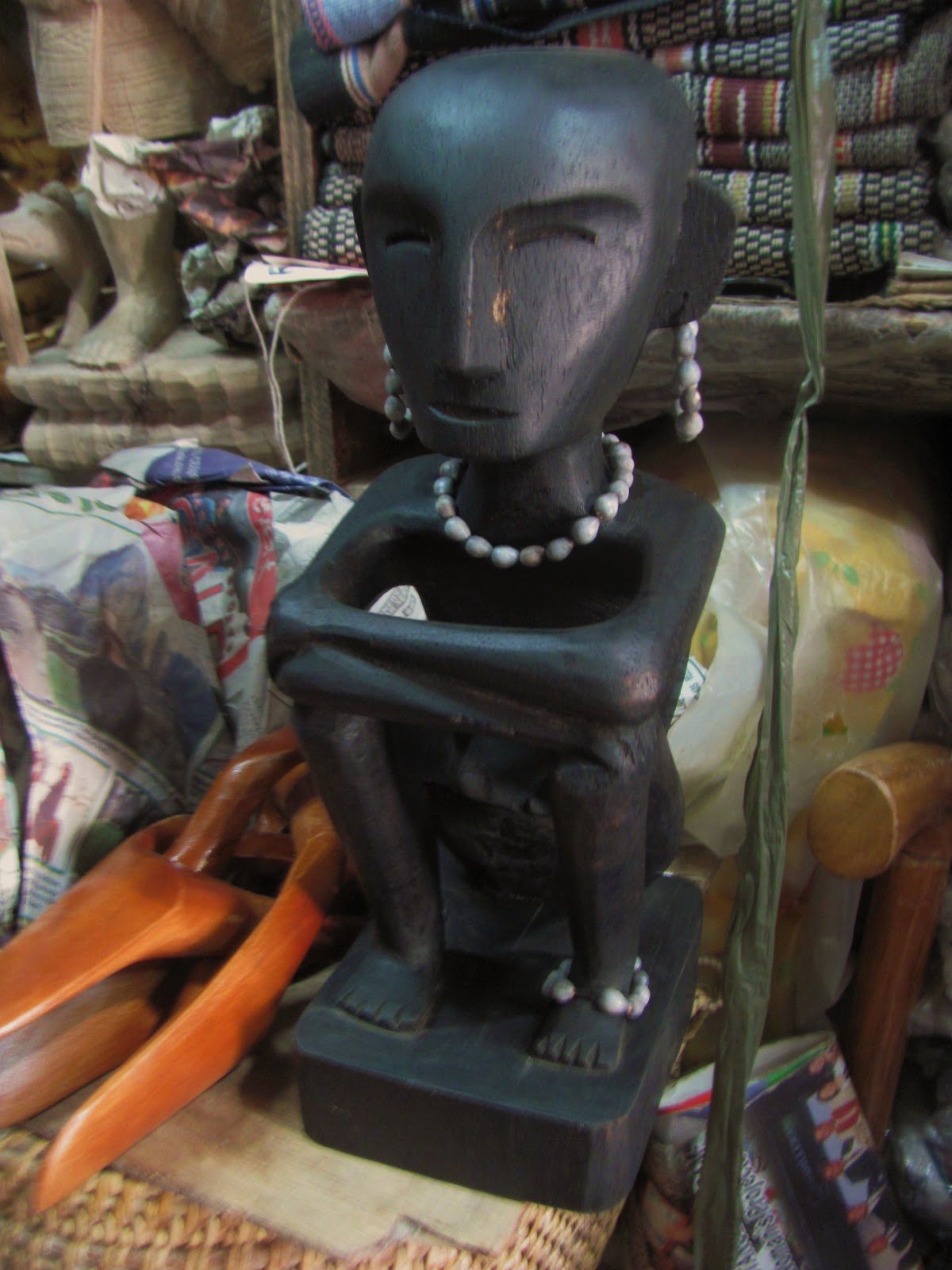
Baguio's Botanical Gardens are also worth a visit, as they proudly showcase woodcarvings and traditional artworks from local tribes. Talking with local vendor, Edmund, I learn to spot the difference between handmade carvings and those formed by machines.
“In Cordillera region, we use only one piece of wood – so each piece is unique,” he says proudly.
Not for the first time in Baguio, I spot the carving of a sullen man with no expression who sits solemnly to stare at each person who walks by. Edmund tells me this is a carving of their rice god, who goes by the name of Boolo.
“He is a very good luck charm for businesses. In ancient times, he would guard the rice sacks or barrels of rice wine,” he says. So essentially, having faith in Boolo meant one would never go hungry.
The indigenous people are not forgotten here either, with proud statues and sculptures scattered throughout the gardens. While there are all sorts of flowers and plants to be found, the real focus is on learning about local culture that has remained so for thousands of years. I learn that be it oil painting or weaving, the number of barrels depicted has to do with the celebration at hand. Three barrels is for a small celebration such as graduation, while five barrels is for a wedding and seven barrels is for a baby.

SIDEBAR: Panagbenga Festival
While Carnivale of Rio de Janiero is famous the world over for lasting five days and nights, Panagbenga Festival lasts for over a month. A lot of the events are aimed at children, making it an ideal choice for families. There are carousels and bumper cars, just as you'd find at any showgrounds back home. Those looking for a throwback to yesteryear, rest easy – there's a roller disco found inside Burham Park.
This annual 'festival of flowers' has been going strong for 17 years now, with each year attempting to outdo the last in the form of elaborate artwork and colorful displays. It was first held in 1995 to rebuild the city's image and morale after a devastating earthquake that shattered Baguio in 1990. The Grand Float Parade takes place each year on the last Sunday of February and it truly showcases the creativity that's possible through gardening.
 As you can imagine, the streets are flocking with people as tourists from near and far gather to see these artistic creations. Forget sleeping in, as the parade starts in the crisp morning air at 8am. Visitors and locals flock to Session Road, where the floats are marched proudly down the street and on to the field at Baguio's Athletic Bowl, where they remain on display for the rest of the day.
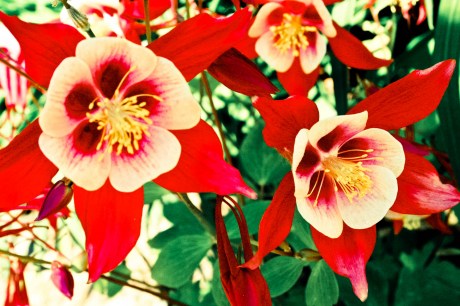 Oriental dragons, the type that wouldn't look out of place in Chinese New Year festivities, are an annual staple entry. Complete with delicate scales and fearsome teeth – you can only tell they're made from flowers when you're close enough to touch it. Some of the floats are topical, mimicking the latest trends or popular web games such as “Angry Birds.”
More than just a celebration of flowers, Panagbenga is a celebration of Spring and green living. As I trekked through Baguio's winding and often steep roads, I found myself entering Burham Park to wander through a dazzling display of florists and gardening stalls, with vendors all too happy to share helpful advice. It was the bonsai stalls that held my attention the longest, and I couldn't keep myself from gazing at their intricate, albeit miniature, system of roots and branches.
While Baguio has always been somewhat of an escape from the hustle and bustle of Metro Manila, those seeking solitude would be more at home in nearby mountain towns such as Sagada or Banaue during the month-long festivities. Originally built for 25,000 inhabitants, it has adapted to fit 250,000 people fairly well. However, that number rises almost to a million during Panagbenga, which is one of the biggest festivals in the Philippines.

In a time of iPhones and 3G wi-fi connectivity, it can be hard for the younger generation to connect with their ancestral roots. Northern Luzon, or at least pockets of it, was one of the few areas in the Philippines to escape colonization, which meant their culture and customs were kept intact. Every year during Panagbenga, indigenous people from various nearby tribes put on workshops, perform tribal dances and sell traditional woodcarvings.
GETTING THERE
By Air – Although there is an airport in town, unfortunately there has been no commercial service to Baguio in recent years. Through flying Air Asia though, you'll arrive at Clark Airport, rather than Manila, which means only a 3 hour bus ride rather than 5.
By Bus – The most convenient and economical way to get to Baguio is by bus. The journey will take 5 – 7 hours, depending on traffic. For a smoother journey, opt to leave at night or very early in the morning.
Buses leave throughout Metro Manila and the fare is 450 – 700 PHP ($10 - $16 USD) depending on if you choose standard, deluxe or VIP. Buses depart frequently from Victory Liner's terminal, in both Pasay and Cubao.


WHERE TO STAY
El Cielto – (www.elcielto-baguio.com) isn't located downtown, but it's only five minutes by taxi from all the city's attractions. Rooms start at $42 USD per night which includes hot/cold shower, cable television, air-con and wi-fi. It's terrific value for money.
Red Lion Pub – (www.redlionpub-baguio.com) More than just your standard pub, Red Lion also plays host to many weary travellers and there's live music every night. Rooms start at $18 USD.
Paladin Hotel – (www.paladinhotelbaguio.com) Located in the heart of Baguio, Paladin Hotel is somewhat of a boutique option. All room rates are inclusive of breakfast, hot/cold shower and cable television. Rooms start at $40 USD.